

- Why Calibration Standards Matter
Every sensor-based ore sorting system depends on calibration to translate a raw sensor signal into a classification decision: ore or waste, accept/drop or eject. When calibration is accurate and current, the sensor threshold correctly reflects the compositional boundary between the ore classes being sorted. When it drifts - through X-ray tube aging, detector degradation, temperature variation or mechanical change - classification accuracy degrades systematically and the entire grade/recovery performance of the ore sorting installation shifts with it.
The calibration standards used to verify and maintain that accuracy matter enormously. Generic standards are designed to confirm that the machine is functioning - that the sensor is producing a signal within expected parameters. They are not designed to confirm that the machine is correctly calibrated for your specific ore, at your current ore grade and mineralogy, at the threshold settings that deliver the performance your operation requires.
ROKKSTA develops calibration standards that are designed specifically for the ore being sorted. Built from characterised materials that accurately represent your ore body's physical and compositional properties, they ensure that sensor calibration maintains a direct, traceable relationship to the intrinsic separation boundary in your material - not just to an abstract instrument specification.

- Why Calibration Defines Ore Sorting Performance
Ore sorting performance is governed by two factors: the ability of the sensor to detect the compositional contrast between ore and waste (Classification Effectiveness) and the ability of the machine to physically separate correctly classified particles (Mechanical Effectiveness). Calibration sits at the heart of Classification Effectiveness - it is the mechanism by which sensor response is translated into sorting decisions.
A well-calibrated ore sorting system operates at or close to the theoretical separation potential of the material. A miscalibrated system produces systematic errors across every particle passing through the machine - not random noise that averages out over a shift, but a consistent bias that shifts the entire grade/recovery curve away from its optimum.
The practical consequences are direct and quantifiable:
When the sensor threshold drifts too conservative (tending to classify particles as ore that should be rejected), gangue rejection efficiency falls, waste accumulates in the concentrate stream and downstream processing costs rise. This is a Type 1 error bias.
When the sensor threshold drifts too aggressive (tending to classify particles as waste that should be recovered), ore particles report to tailings, mineral recovery falls and revenue is permanently lost. This is a Type 2 error bias - typically the more costly of the two.
Neither type of drift triggers an immediate production alarm. Both accumulate silently unless actively monitored against a calibration standard that is specified correctly for the ore.


- Why Generic Standards Are Not Enough
Calibration standards are commonly supplied as part of a sensor maintenance programme. These standards serve a legitimate and necessary purpose: they verify that the sensor hardware is operating within its design specification. But they have a fundamental limitation for ore sorting operations - they are designed for the machine, not for the ore.
Generic calibration standards are typically manufactured from materials chosen for their physical stability and reproducibility: ceramic tiles, reference polymers or standardised metal alloys. Their X-ray attenuation, reflectance or spectral properties are defined relative to the sensor's measurement range - not relative to the actual compositional contrast between the ore and waste being sorted at your operation.
This means that even a correctly calibrated sensor - one that passes every routine calibration check - may have its classification threshold set at the wrong point for your ore. The sensor is working as designed. It is simply not designed around your material.
The gap between generic and ore-specific calibration becomes most critical in three situations:
When ore properties vary across domains or lithologies. Calibration standards developed for the original ore type may not correctly represent material from a different zone, horizon or weathering domain. As the mine advances, generic standards do not update with it.
When high-value or fine-grained mineralogy is involved. For ore types where the compositional contrast between ore and waste is narrow - where the separation boundary falls in a densely populated part of the signal distribution - a small calibration offset has a disproportionately large effect on recovery. Generic standards that do not accurately represent this boundary zone leave significant performance on the table.
When multiple sensor principles are in use. For ore sorting systems operating XRT, optical and NIR sensors in combination, each sensor type requires calibration that is referenced to the same physical material. Generic standards for each sensor type are developed independently and may not be mutually consistent, creating conflicts in multi-sensor classification logic.
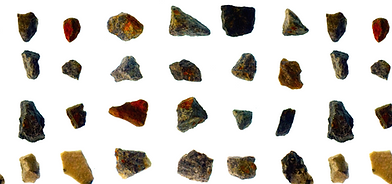
- Ore-Specific. Traceable. Documented.
ROKKSTA develops calibration standards that are designed from the material up - starting with your ore body's physical and compositional properties, not with an instrument specification.
Developed from characterised ore material. ROKKSTA calibration standards are developed using ore characterisation data - particle density distributions, elemental composition, mineralogy and X-ray attenuation properties measured directly from your ore. Where appropriate, we use actual ore and waste samples from your operation as the physical basis for the standards, ensuring that the calibration reference directly reflects the material properties that drive sorting decisions on your machine.
Spanning the full relevant signal range. Effective calibration standards must cover the full range of ore and waste signal values present in your feed - including the transition zone around the classification threshold, where calibration accuracy has the greatest impact on sorting performance. ROKKSTA designs multi-point standard sets that provide coverage across this range, enabling robust threshold verification rather than a single-point check.
Specified around your ore. Every ROKKSTA calibration standard is specified around your ore body's requirements - the compositional boundary that determines sorting performance on your material - rather than around a generic standard format designed for instrument verification alone. The specification follows the physics of your ore, not a one-size-fits-all reference.
Documented and traceable. Every ROKKSTA calibration standard set is delivered with full documentation of the ore characterisation basis, the physical and compositional properties of each standard, the measurement protocol and the expected sensor response values. This provides a traceable calibration record for quality management systems, regulatory compliance and performance verification.
- Calibration for XRT Ore Sorting
ROKKSTA develops calibration standards for XRT and Dual Energy XRT (DE-XRT) ore sorting systems. XRT is among the most widely deployed sensing technologies in ore sorting and its calibration requirements are specific and demanding - which is why it is the focus of our calibration standards work.
X-Ray Transmission sensors - including DE-XRT systems - are particularly suited to applications where the separation driver is mineralogical (silicate vs. carbonate, sulphide vs. gangue, dense vs. light minerals). XRT sensors measure the attenuation of X-rays passing through the particle, which correlates with particle density and effective atomic number.
Calibration of XRT ore sorting systems requires reference materials with defined X-ray attenuation properties spanning the ore–waste contrast range. For DE-XRT systems, calibration must address both the low-energy and high-energy channels independently and their ratio response, which is the primary signal used for mineralogical discrimination.
Key calibration drift sources for XRT ore sorting include: X-ray tube aging (progressive reduction in output intensity), detector gain drift (changes in signal amplification across the detector array) and geometric misalignment (changes in the spatial relationship between the X-ray source, belt and detector line). Regular calibration verification against ore-representative standards is the only reliable method for detecting and correcting these drift sources before they affect ore sorting performance.
- Designing a Calibration Programme for Ore Sorting
A calibration standard is not a one-time purchase - it is the foundation of an ongoing calibration programme that must evolve with the ore body and the machine. ROKKSTA supports operations in designing calibration programmes that match the pace of change in their ore sorting environment.
Calibration frequency. The appropriate calibration interval depends on the rate of drift in the specific sensor system, the stability of the ore feed and the economic sensitivity of the ore sorting application. ROKKSTA recommends calibration verification frequencies based on measured drift rates from commissioning and audit data, rather than on fixed schedules that may be either excessive or insufficient for the specific installation.
Trigger-based recalibration. In addition to scheduled calibration cycles, ROKKSTA recommends defining trigger conditions - changes in ore domain, significant shifts in feed grade or mineralogy, unplanned maintenance events affecting the sensor system - that initiate an immediate calibration review regardless of the scheduled interval.
Standard replacement and updating. Physical calibration standards wear and change over time. Standards developed for one ore domain require updating as the mine advances into materially different geology. ROKKSTA provides standard replacement and updating services, with each new standard set fully documented against the characterisation basis of the previous set to maintain calibration continuity.
Integration with equipment audits. Calibration verification is a core component of ROKKSTA's ore sorting equipment audit programme. Where audit findings identify calibration drift as a contributing factor to performance losses, updated calibration standards can be specified and developed as part of the audit remediation process.
- What You Receive
Title | Description |
|---|---|
Replacement Schedule Guidance | Recommended standard replacement intervals and trigger conditions for recalibration based on your specific installation |
Calibration Record Template | Structured documentation format for logging calibration checks, results and corrective actions |
Expected Response Values | Defined sensor response targets for each standard, providing the reference against which drift can be detected and quantified |
Measurement Protocol | Step-by-step procedure for using the standard set to verify and adjust ore sorting sensor calibration |
Characterisation Basis Report | Documentation of the ore material properties used to specify each standard, including density, elemental composition and sensor response data |
Calibration Standard Set | Physical reference materials with defined properties spanning the ore–waste contrast range for your specific ore body and sensor type |
- Benefits to Your Operation
.png)
Protect ore sorting recovery - ore-specific calibration standards keep threshold settings aligned with the actual compositional boundary in your material, preventing the systematic recovery losses that generic standards miss
.png)
Detect drift before it costs recovery - regular verification against a properly specified standard identifies sensor drift early, when correction is straightforward and before performance loss has accumulated
.png)
Maintain classification accuracy across the ore body - as the mine advances and ore properties change, updated calibration standards ensure the ore sorting system tracks the material, not an outdated reference
.png)
Support quality management and compliance - fully documented, traceable calibration records satisfy QMS requirements and provide an auditable trail for ore sorting performance
.png)
Enable robust performance verification - calibration standards documented against a characterised ore basis allow ore sorting performance to be verified against a defined material reference rather than an abstract instrument specification

Reduce uncertainty in feasibility and investment decisions - for operations evaluating ore sorting expansion or modification, a robust calibration programme provides the reliable performance baseline that investment decisions require
- Part of a Structured Ore Sorting Workflow
Calibration standards connect directly to the full ROKKSTA ore sorting service workflow:
← Ore Characterisation provides the particle density, elemental composition, mineralogy and sensor response data from which calibration standards are specified. Characterisation is the technical foundation that ensures standards accurately represent the material being sorted.
← Sortability Testing generates the sensor amenability data - signal distributions, contrast margins, threshold sensitivity - that defines the critical calibration zones where reference coverage is most important. Amenability test data is often the most precise basis available for specifying calibration standard target values.
← Equipment Audits identify calibration drift as a root cause of ore sorting performance loss and trigger the need for updated or replacement calibration standards. ROKKSTA commonly develops new calibration standard sets as part of audit remediation programmes.
→ Ongoing Performance Monitoring - once calibration standards are in place, systematic logging of calibration check results against the ROKKSTA-specified target values provides a continuous performance record that supports both day-to-day operations management and periodic review.
Frequently Asked Questions
- Get in Touch With ROKKSTA
Ready to optimise your ore sorting process? Our team of experts is here to provide tailored solutions and independent insights.


